
SUIBROKERS DAO · field note
Sui and Robinhood Chain products: what users can actually do
A user-action comparison of wallets, assets, transfers, trading, and supported product surfaces.
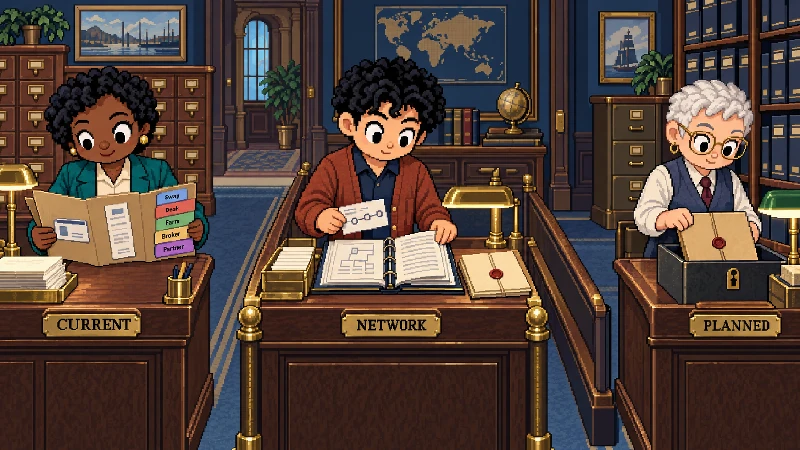
Robinhood Chain is a documented permissionless Ethereum-compatible Layer 2. A reader can use its documentation to understand network entry, EVM transactions, bridges, contracts, and tokenized-asset infrastructure. It is a network that supports applications, not a one-to-one replacement for any particular app.
The comparison below is about access and workflow. Current SUIBROKERS is an app and community layer on Sui, with its own wallet-signed Swap, Desk, Farm, Broker, and Partner surfaces.
Robinhood Chain’s documented surface
The Robinhood Chain documentation describes a live permissionless network, EVM compatibility, ETH as native gas, and tools for connecting, bridging, deploying contracts, and running a node. It also describes infrastructure for tokenized real-world assets. The page says inclusion of third-party protocols is not an endorsement or warranty, so a reader still checks each application.
Current SUIBROKERS product docs describe a narrower, concrete journey. Swap uses Bluefin 7K routing and explicit Sui wallet signing. The Desk uses the configured Aftermath integration and explicit deposit or withdrawal requests. Partners uses first-valid-referral attribution and ledger-reported Partner Points, Trust, and accrued revenue.
Compare the workflow
| Stage | Current SUIBROKERS | Robinhood Chain context |
|---|---|---|
| Enter | Connect a compatible Sui mainnet wallet | Connect a supported EVM wallet or JSON-RPC client |
| Choose | Swap supported Sui assets, inspect Desk, or read Broker/Partner state | Choose a contract, asset, bridge, or app documented for the chain |
| Approve | Review and explicitly sign the Sui action | Review the EVM transaction or contract approval |
| Verify | Confirm transaction and SUIBROKERS ledger state | Confirm chain transaction and target app/indexer state |
| Learn next | Points, Farm capacity, Desk/Partner evidence | Contract, asset, and network-specific evidence |
Suppose your job is to exchange SUI for USDC. SUIBROKERS gives you a current Sui route and a product-specific Points rule after verification. A Robinhood Chain job might involve an EVM contract, bridge, or tokenised asset. The reader must verify contract rights, gas asset, custody, and application terms. A similarly named token or a familiar brand does not make the workflows equivalent.
The distinction matters for tokenized equities too. Robinhood Chain documents infrastructure for real-world assets, while SUIBROKERS does not claim to offer equities. The SUIBROKERS token is planned separately and is not needed for current products.
How to choose
Choose SUIBROKERS when the job is the current Sui Swap, Desk request, Farm/Points understanding, or Partner attribution path. Choose Robinhood Chain documentation when the job is evaluating its network, EVM contracts, bridges, or asset infrastructure. Compare each application’s actual evidence, not the brand story.
Read Robinhood Chain documentation, SUIBROKERS docs, and the Sui object model. When the current action is a Swap, use OPEN APP.
The practical choice follows the job. Use Robinhood Chain documentation when you are checking an EVM network, contract, bridge, or tokenized-asset surface. Use SUIBROKERS documentation when you are checking a Sui wallet action, provider request, or service ledger. The network, application, and asset each need their own evidence.