
SUIBROKERS DAO · field note
PONS: how the pool, curve, platform, and token fit together
An explanation of PONS as a platform concept, including pool and curve mechanics, token role, and product boundaries.
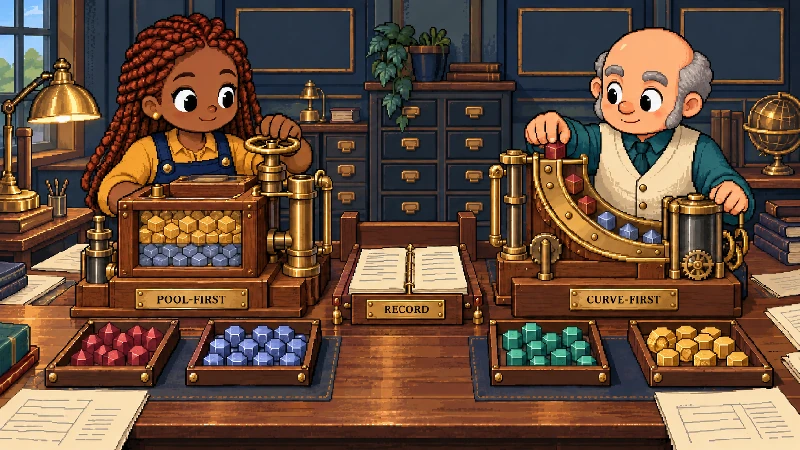
“PONS” can refer to a platform, a protocol token, or an individual launch. The first step is to identify which version and which contract the reader means. The current pons documentation describes v1 launches on Robinhood Chain; the v2 documentation describes a different curve-first lifecycle. A name or ticker alone cannot tell you which mechanism produced a price.
The platform layer
The pons docs describe a place to launch and trade tokens on Robinhood Chain, with wallet-approved transactions and no custody by the interface. The platform exposes a launch’s metadata, pool or curve state, trading controls, and contract events. That service layer helps a reader find and inspect a launch; it does not turn every launch into the protocol token, an endorsement, or a promise of liquidity.
Keep four objects separate:
| Object | What it does |
|---|---|
| Launch token | The ERC-20 asset created for one launch |
| Pool or curve | The mechanism that quotes and settles buys and sells |
| Platform protocol | The contracts and interface that create, inspect, and route launches |
| PONS token | The protocol asset discussed in v1 fee and buyback documentation |
That separation prevents a fee paid by a launch from being mistaken for a holder right in PONS, and prevents a launch token’s price from being described as the platform’s own valuation.
v1: pool first
Under the current v1 overview, a launch creates a fixed-supply token and a WETH pool in the same transaction. Every token trades against WETH in its own pool; there is no bonding curve and no later migration. Buys and sells move the live pool price, while price impact and slippage depend on the trade size and available liquidity. The docs describe a one-billion-token supply, a 1% pool fee, and a 0.0005 ETH launch fee for the current configuration; a particular launch should still be checked against its onchain state.
Graduation in v1 means that the paired WETH reaches the documented threshold. Trading continues in the same locked pool. Graduation confirms that threshold, not quality, future liquidity, or an exit. A reader studying one launch should record its token address, WETH pool, fee snapshot, paired amount, and current owner or creator records.
v2: curve first, pool later
V2 changes where price discovery begins. The launch token’s supply starts in a bonding curve. As buyers purchase, the curve price rises; as sellers return tokens, it falls. The curve holds reserves and remains the counterparty until the launch sells out. A purchase that finishes the curve can trigger graduation. The collected quote asset and the reserved supply then seed a Uniswap v4 pool whose liquidity is locked permanently.
The token stays the same through graduation, but the trading mechanism changes from the curve to the pool. A launch can use an approved pairing asset other than ETH. In that case the pairing asset is the price currency, the asset used for buys and sells, and the asset in which creator fees are paid. A token can therefore rise against its pair while falling in dollar terms if the pair itself moves.
Follow the cashflow
For a v2 launch, a reader can trace one purchase like this:
- The buyer approves the pairing asset and sends a curve trade.
- The curve determines the output, fee, and any launch-time protection under the launch’s fixed terms.
- The pairing asset stays in the launch’s accounting; it is not silently converted to ETH.
- When the curve graduates, reserves seed the locked Uniswap pool.
- Post-graduation fees can accrue in either asset and be converted before creator or protocol balances are credited.
This explains why “the platform makes fees” is too vague. Ask which launch, which version, which asset was charged, who receives the split, and whether the value was paid, locked, bought back, or burned. The v2 docs describe optional creator buybacks as tokens locked and released over five years; that is different from a burn. The v1 docs describe protocol funds buying PONS and sending it to a burn address. Those statements belong to different versions and different objects.
Names and symbols can be copied. Resolve the chain ID, full token address, factory or curve, pair asset, pool, and graduation state before comparing a launch. Read the platform’s own risk disclosure and the relevant contract state rather than relying on a screenshot or market-cap label.
Read pons fees, buybacks, and burns for the accounting path and the Robinhood Chain documentation for the network context. Always use the full launch address when moving from explanation to a live check.